September 2, 2019 – A Monumental Semester Part Two (OOTD #559)

For part one, click here.

I think the main draw of Washington DC as a tourist destination for me is the monuments and memorials. Think about it — what can you really see in the White House or the Supreme Court? Not a lot. The average tours they give to the public only last about 30 minutes because there’s very little that they actually will allow people in to see. They have the potential to be very cool buildings, but you can’t see much of their insides, and what you can see of their outsides is pretty but not jaw-droppingly so.

So what’s left? The museums, I guess — which I absolutely respect if you were to say they’re your favorite part of DC. I’m just not a museum person. I don’t deny that the Smithsonians may be some of the best history and science museums in the world, but that only means so much to a gremlin like me that gets bored in museums. My only exception is art museums — I could spend a lifetime in those. Unfortunately, DC’s not big in the art museum scene. I guess there’s the National Portrait Gallery?

IMG_6919.jpeg

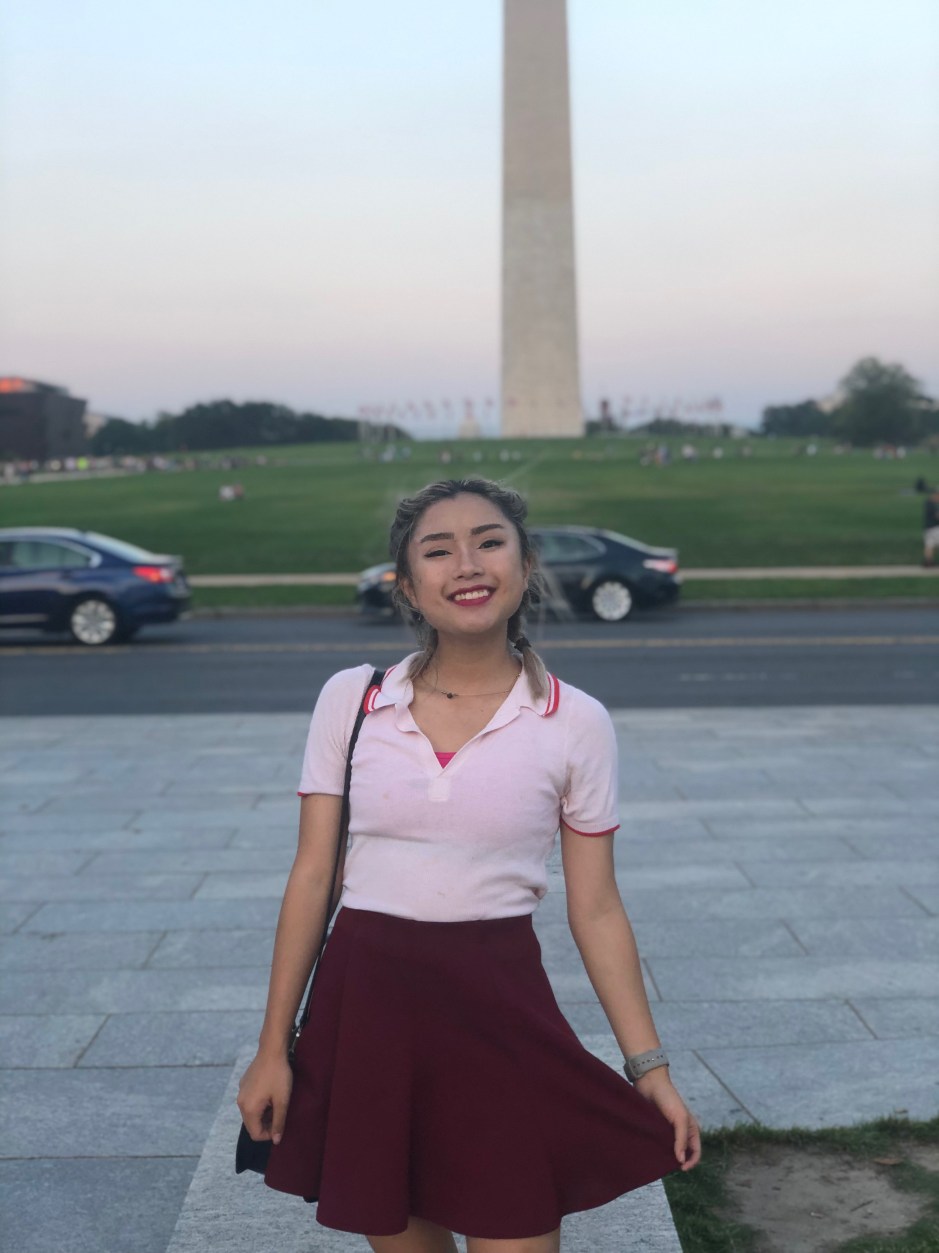
That’s not to say DC lacks art, though — and that’s where the monuments and memorials come in. With the exception of the Washington Monument (which — I’m sorry if you’re a big Washington Monument fan — is just a giant stick into the sky), the monuments and memorials on the National Mall are really something to see.

This was my second tour of the National Mall within just a few days, though this one was a lot more thorough. Compared to last time, where we were just led around from one monument to another to explore on our own (so much on our own, that I in fact got separated from the group and never made it to the Jefferson Memorial), this time, we actually had someone explain to us what we were looking at.

IMG_6945.jpeg

Honestly, it was almost too much explaining — it was like, a four-hour tour, and we really only saw a few things. I still haven’t gotten to see the Jefferson Memorial. Will I actually make it there before the end of the semester? Stay tuned.

That’s about it for today. Thanks for reading, and I’ll see you in the next one with more updates on my life this semester in Washington, DC. Don’t forget to check me out on Pinterest, Instagram, Facebook, BloglovinTwitter, and Tumblr! For business inquiries, shoot me an email at lensembledujour@gmail.com!


Top: H&M

Shorts: H&M
August 31, 2019 – A Monumental Semester (OOTD #558)

Blog title courtesy of Notre Dame’s Washington Program tagline.

IMG_6856.jpeg

Say what you will about Washington DC being a fake city consisting of nothing but tourists and glorified temps who come and go with every election (in fact, I’d probably half agree with you), but I like the monuments and memorials.

IMG_6847.jpeg

I don’t know, I just think they’re cool. With the exception of the Vietnam Veterans Memorial (which is my favorite) and maybe to a lesser extent the Korean War Veterans Memorial, none of them are super provocative, which to me is what makes a good memorial.  However, they’re still fun to look at. No, there’s nothing emotive or honestly really even that controversial about the Lincoln Memorial. In the end, it’s just a giant statue of a guy in a chair. But you can still marvel at the artistry and technique that went into creating the giant statue of a guy in a chair.

I think, for me, that’s what makes the difference between a cool statue and a memorial — a memorial should have some form of impact for the viewer. And that doesn’t have to be in the form of controversy in its creation or design, as was the case with the Vietnam Veterans Memorial (though I do find the story behind its design to be fascinating).

IMG_6876.jpeg

A memorial should make you think or reflect on something — in the case of the Vietnam Veterans Memorial, it’s to make you reflect on how terrible war is for just about everyone involved. It’s an ugly wall for an ugly war. To compare, the National World War II Memorial may have a flashy fountain and beautiful sculptures of eagles, but it doesn’t really make you think about anything but how flashy the fountain is and how beautiful the sculptures of the eagles are. For that reason, the Vietnam Veterans Memorial is the better memorial — even if it’s the uglier “statue.”

IMG_6831.jpeg

Like I said, though, that’s not to say that some of the “big statue” memorials, like Lincoln or Washington or Jefferson, aren’t still fun to see. They’re just not provocative to see. Comparing the Vietnam Veterans Memorial to the Lincoln Memorial is like comparing a Francis Bacon to a Pier1 Imports painting of a fruit bowl — yes, Lincoln is pretty to look at and an impressive display of technique, but what did it really make you think about? We all already know what a fruit bowl looks like, and we all already know that Lincon was a good president.

Anyway, those are my thoughts on the monuments and memorials in DC that you didn’t ask for. One last opinion for the road — how long until a woman gets a memorial on the National Mall of the scale of Lincoln or Jefferson? And who do I have to know in order to get to design it?

That’s about it for today. Thanks for reading, and I’ll see you in the next one with more updates on my life this semester in Washington, DC. Don’t forget to check me out on Pinterest, Instagram, Facebook, BloglovinTwitter, and Tumblr! For business inquiries, shoot me an email at lensembledujour@gmail.com!


Top: H&M

Skirt: Forever21

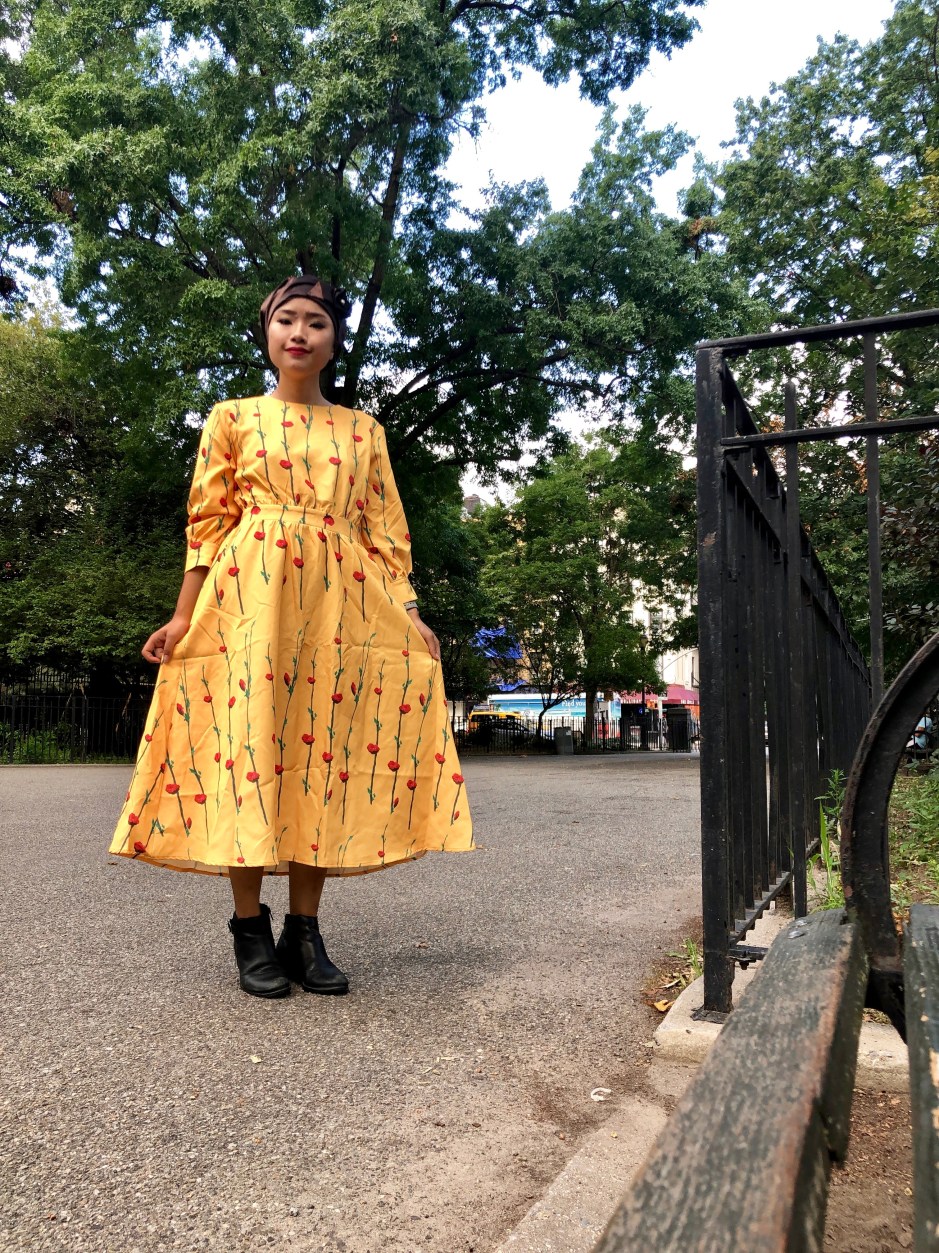
August 30, 2019 – Parks and Recreation (OOTD #557)

Parks are one of my favorite places for pictures.


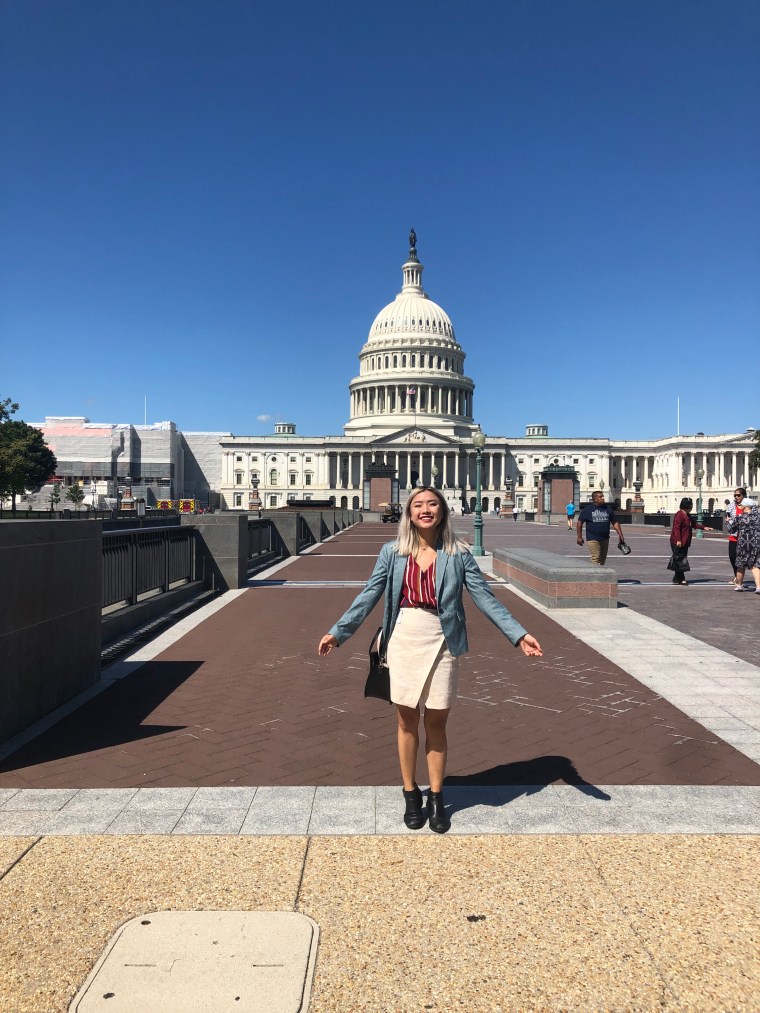
August 29, 2019 – Capitalizing on the Capitol (OOTD #556)

Naturally, the first tourist destination for my semester in DC was Capitol Hill.

I mean, I’ve visited Congress before, on account of having been a middle schooler before and going on the trip that every American middle schooler (at least on the Eastern half of the country) seems to go on to DC. It’s like a rite of passage for young American teens — if your parents don’t take you, your school probably will.

Honestly, in terms of cool government buildings, DC probably isn’t the best. The Capitol is definitely worth seeing, but the Supreme Court and the White House aren’t all that. Otherwise, DC has a lot of brutalist designs (think the FBI building or the State Department, which I think were designed to be as ugly as physically possible). Budapest’s Parliament or London’s Westminster Palace are personally more my taste in terms of impressive architecture.

Some of the monuments and memorials are really cool, though, but I’ll get into those another day.

I can’t speak to the basement offices or the mysterious Capitol subway that runs between the two chambers, but the stuff you get to see on a generic tour is neat. We went with someone from the office of Jackie Walorski, the Indiana representative from the district where Notre Dame was. It was just some poor intern who looked more excited to get to something interesting for once, but she did a good job.

In fact, I’m a little jealous she got to give us a tour — that’s not something I can do in my internship. As much as I don’t think a Capitol Hill internship is really for me, I do think some of the benefits to working on the Hill are enviable.

That’s about it for today. Thanks for reading, and I’ll see you in the next one with more updates on my life this semester in Washington, DC. Don’t forget to check me out on Pinterest, Instagram, Facebook, BloglovinTwitter, and Tumblr! For business inquiries, shoot me an email at lensembledujour@gmail.com!


Top: a boutique in Kathmandu

Blazer: Banana Republic

Skirt: Banana Republic

August 26, 2019 – Summer Salmon (OOTD #555)

I kind-of regret not considering Georgetown more seriously when I was applying for university.

I don’t remember why I ruled it out, but it was eliminated from consideration before I even got around to visiting schools. I think if I had visited, I may have given it some more serious thought — as it turns out, Georgetown is a really lovely neighborhood, not to mention, it’s in DC, arguably the hub for the types of studies I want to pursue.

(I also probably could’ve gotten into it when I was 18, unlike, say, H_____d, but we don’t have to talk about that).

But no matter — I’m at Notre Dame now, and I love it all the same. South Bend is no Washington DC, but I’m sure I’d have things to complain about if I lived in DC for 10 months a year: in fact, I already had some complaints about the culture of the city after having been here for less than a week, which I voiced in yesterday’s blog.

And besides, I get to come work and live in DC now for a semester, so I ended up getting my DC experience in the end.

That’s about it for today. Thanks for reading, and I’ll see you in the next one with more updates on my life this semester in Washington, DC. Don’t forget to check me out on Pinterest, Instagram, Facebook, BloglovinTwitter, and Tumblr! For business inquiries, shoot me an email at lensembledujour@gmail.com!


Top: Vintage (thrift, Street Scene Vintage)

Skirt: Forever21

August 17, 2019 – A New York Minute (OOTD #550)

Nothing quite beats the feeling of returning back to the US after being gone for a long time.

Even if it’s just an airport — even an airport I’ve never been to before — and I have hours and hours of connections to make before I actually make it back to Kentucky, it’s nonetheless comforting being back in my own country.

IMG_6271.jpeg

My flight from Tel-Aviv left at around midnight local time and arrived at New York JFK at 6 AM in the morning. My next flight to Atlanta wasn’t until 4 PM (though it ended up getting pushed back a few hours — thankfully I was still able to make the connection from ATL to LEX), so with my time, I decided to do what I do best in airports — leave and come back.

After dropping my bags off at baggage storage, I headed to the AirTrainJFK  to get into the city. JFK isn’t directly connected to the subway system (compared to say, Chicago O’Hare or London Heathrow or Copenhagen Kastrup, where you can get directly on the metro from the airport terminal), but it has its own train line that then connects to the subway in Queens.

IMG_6174.jpg

From Queens, I then bought a MetroCard for the subway (hot take: why is it called “MetroCard” when it’s the subway system? You’d immediately give yourself away as a visitor rather than a local if you referred to the New York underground transport system as a “metro” rather than a “subway,” so why do they use the word “metro” for their cards?) and took the J Train into Manhattan.

I only had a few hours — not enough to go into the tourist areas in the center of Manhattan —  so I mostly hung out around East Village.

IMG_6207.jpeg

This was my first time in this particular neighborhood, and I must say, I liked it very much. With the exception of a homeless man who swore at me for ignoring him as I walked into a Starbucks, it was a lovely part of town — quieter than the Upper East or Upper West Sides, but still very much a part of New York. And it was relatively balanced in diversity — it didn’t seem to have a particular dominant cultural or ethnic leaning. Not that a neighborhood having a strong cultural leaning is a bad thing at all — but I thought it was cool to see a neighborhood that seemed to have so many different people living together in close proximity.

IMG_6196.jpeg

My one complaint (besides the swearing homeless man — but like, that’s just New York) was that a lot of shops and restaurants were closed, even though I was there during the day. I visited on a Saturday morning, and nothing really seemed to start opening up until around 11AM, which was when I needed to start heading back to the airport. I was able to go into a few consignment shops, but on the whole, I was really only able to wander around the park and read The Times in Starbucks.

IMG_6209.jpeg

Still better than sitting in the airport, but I guess New York does after sleep sometimes after all.

That’s about it for today. Thanks for reading, and I’ll see you in the next one with more updates on my life this summer. Don’t forget to check me out on Pinterest, Instagram, Facebook, BloglovinTwitter, and Tumblr! For business inquiries, shoot me an email at lensembledujour@gmail.com!


Dress: A shop on either Ben Yehuda or King George Street in Jerusalem (I’ve already forgotten, oops)

Hat: Thrifted (a consignment shop in Jerusalem)

August 16, 2019 – End Times (OOTD #549)

I’m really on a roll with these religion-themed blog titles.

IMG_6026.jpeg

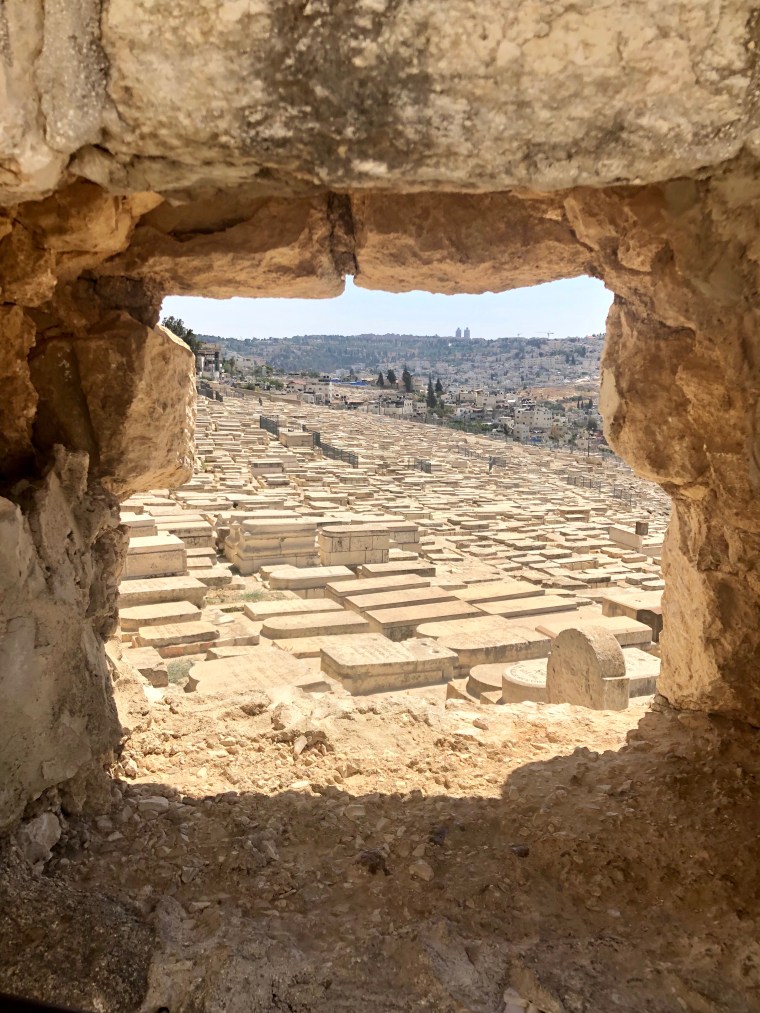
The reasoning behind this one, if it weren’t clear (which, to be fair, it’s probably not on the surface) is because this was my last day in Israel-Palestine, and I visited the Mount of Olives — the location where some faith traditions believe the end of the world will occur.

IMG_6150.jpeg

Another layer of meaning you could derive, if you so choose to, is that I also visited the Garden of Gethsemane, the place where Jesus stopped and prayed before the end of his life. It was also a Friday, the end of the working week and the beginning of the Jewish Sabbath, Shabbat. 

After my big tour the previous day, I felt like I had pretty much seen everything within Old City that I wanted to see, so I decided to walk a little beyond the bounds of Jerusalem city center. After consulting the Internet for ideas of things to do in Jerusalem for free on Shabbat, I decided on the Garden of Gethsemane and the Mount of Olives.

IMG_6012.jpeg

And I wasn’t disappointed. I don’t know if I’d say either of them were my favorite sites from the whole trip (to be honest, I don’t know if I could choose just one) but they were a perfect way to get away from the insanity that is Jerusalem. Jerusalem wasn’t Rome insane, but, like Rome, it’s an ancient city that modern people live in — as a result, the limitations of architecture that was only built to accommodate donkeys and foot traffic is  constantly coming into conflict with the demands of 21st century life. I can’t tell you how many times I was almost run over by a scooter trying to drive through the narrow, winding streets of Old City.

IMG_5986.jpeg

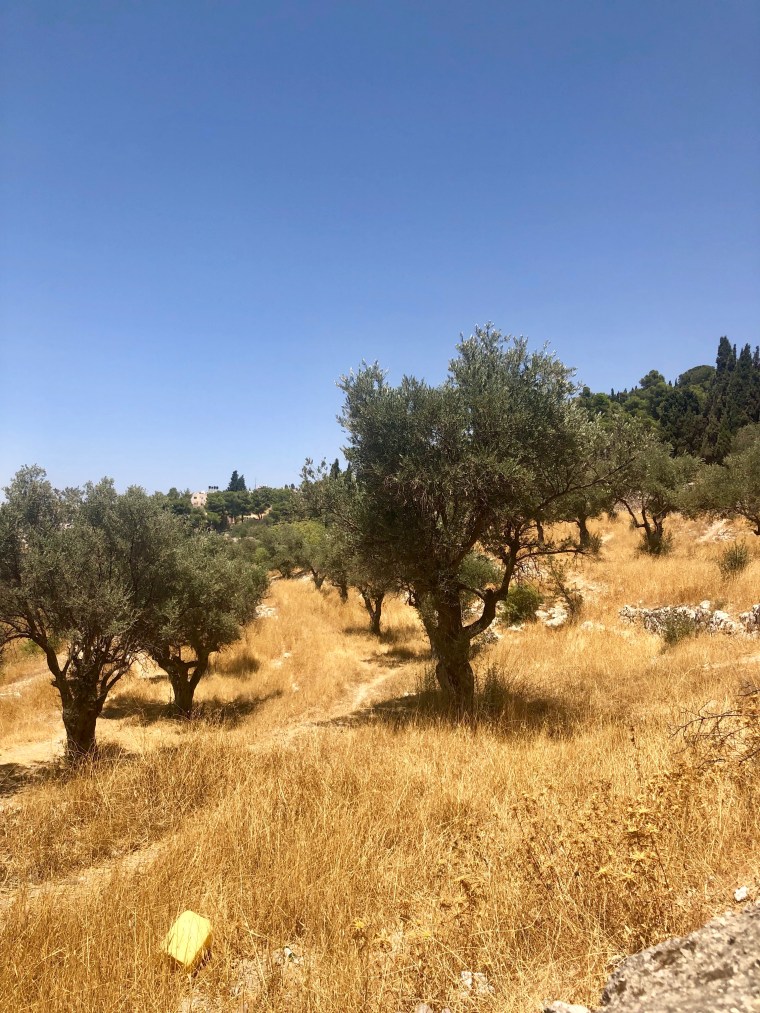
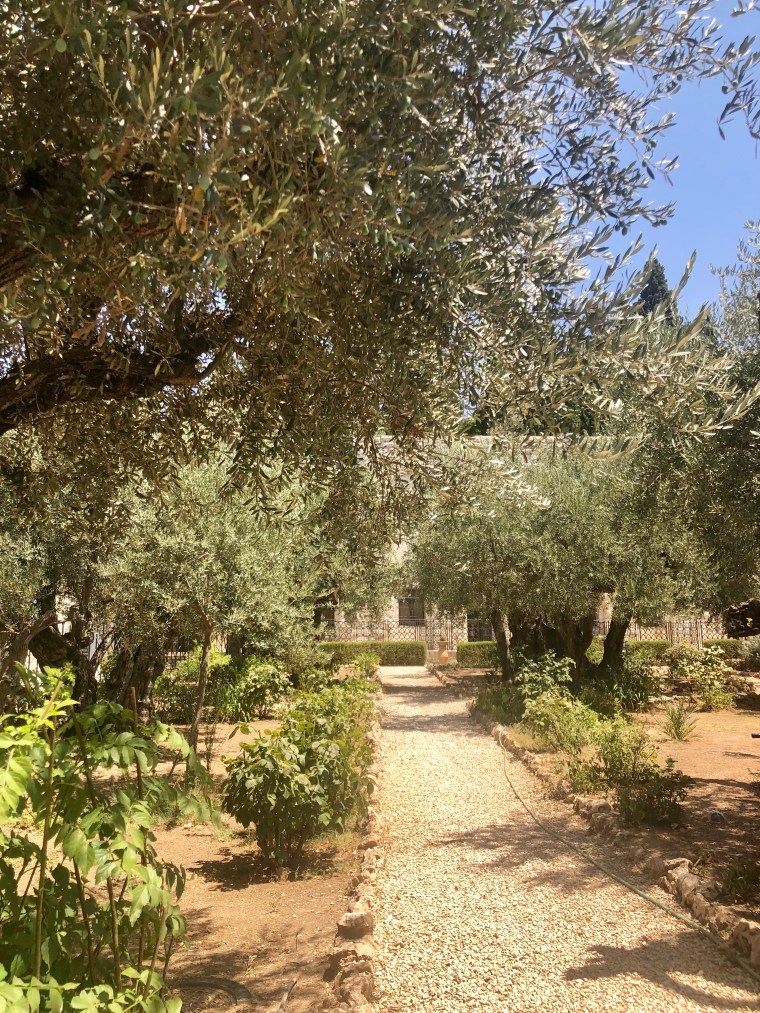
Gethsemane wasn’t much to look at as a garden — sure, it was lovely, but it’s no grand botanical conservatory, like what Copenhagen has. It’s simple and small — you can walk the perimeter in about two minutes. There’s an attached church, as with all of the “holy” Christian sites in Jerusalem, but it’s no architectural marvel.

What makes the Garden of Gethsemane great is that it’s one of the only sites in Jerusalem that actually looks somewhat like what it might have looked like in Biblical times. You can visit the Church of the Nativity in Bethlehem, but there will be no traces of the stable that supposedly used to stand there. You can visit the Church of the Holy Sepulcher in Old City, but there’s no geographic indication that is was once a hill where the crosses stood. In fact, as I understand, many historians question whether these are the real locations of these famous religious events at all — or whether they’re just based on tradition stemming from an era of Crusaders who were desperate to claim they’d discovered the location of Jesus’s first carpentry classes.

The Garden of Gethsemane, however, actually is the garden from the stories. And furthermore, the olive trees may even potentially be the trees (or at least, descendants of the trees) that were there in Biblical times. Though the trees are too old to date precisely, scientists have determined that it’s possible that several are at least 900 years old, possibly older.Compare this to the (in my opinion) somewhat gaudy Church of the Holy Sepulcher, where Jesus was supposedly crucified, that’s surrounded on all sides by apartments and shops that prevent you from visualizing Golgotha as it might have looked 2000 years ago, and you see why I liked Gethsemane so much. A local caretaker for the garden even offered me some clippings from the olive trees and some saffron (which he instructed me to make tea out of in order to attract a boyfriend). IMG_6011

The other site I liked was the Mount of Olives. I wish it weren’t so hot when I made the climb from Lions’ Gate to the Church of the Ascension  (which I didn’t even go into because there was an entrance fee), but it made for a beautiful panoramic view of the city from the top. It made for the perfect end times to my Jerusalem trip.

IMG_6056.jpeg

That’s about it for today. Thanks for reading, and I’ll see you in the next one with more updates on my trip to Israel-Palestine this summer. Don’t forget to check me out on Pinterest, Instagram, Facebook, BloglovinTwitter, and Tumblr! For business inquiries, shoot me an email at lensembledujour@gmail.com!


T-shirt: Forever21

Turtleneck: Amazon

Jeans: Hollister

August 15, 2019 – Holy Ground (OOTD #548)

Thursday was my tourist day in Jerusalem.

0a3a45a0-11f7-4fea-9e55-e110143166ab

What, you thought I was going to go all the way to the Holy City without seeing the major tourist sites — the Western Wall, the Al-Aqsa mosque, and of course, the University of Alabama gift shop?

IMG_5819

The place I stayed at, Abraham Hostels, also offered tours, and as a guest, I got a slight discount. I considered trying to visit some of the “holy sites” by myself, but after a few days in Israel-Palestine on own, I realized that it would be best to just go with a tour guide.

Could I have probably done the research and learned how to visit some of the “holiest” and most contested locations in the world? Sure — and lots of visitors do it perfectly safely every day. But after spending half of the week stressing out over how to travel from Israel to Palestine when it’s illegal for even locals to so (spoiler alert: I figured it out), I decided I wanted a break. Maybe I had been spoiled after my cruise in the Galápagos Islands, but it sure is nice to have someone take care of all of your travel arrangements for you.

IMG_5918

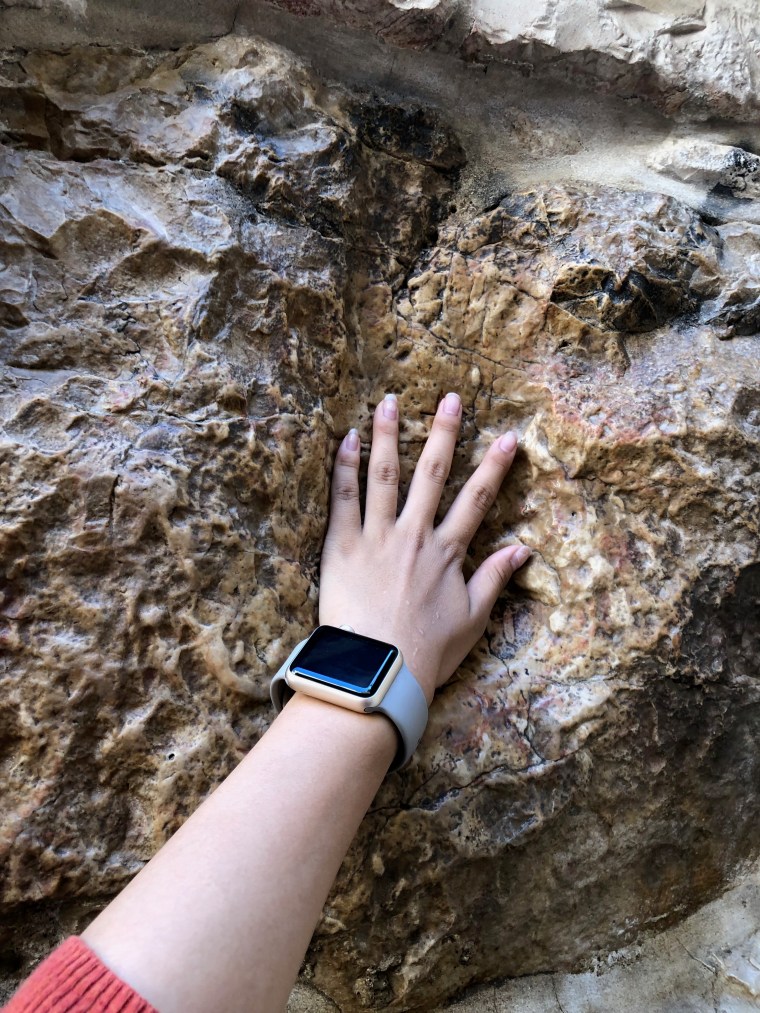
On my designated “tourist day,” I saw the Western Wall, the Al-Aqsa Mosque (and the Dome of the Rock), the Church of the Holy Sepulcher (for the second time), the Via Dolorosa, the Church of the Flagellation, and Jesus’s supposed handprint. Oh, and a Bama gift shop. That may have been my favorite.

img_5973

I’m just teasing —  I think my favorite may have actually been the Al-Aqsa Mosque and the Dome of the Rock, just for the sheer beauty of the structure. I’ve never seen anything like it, and I’ve seen a lot (seriously, so many) of places of worship in my travels.

This was actually one of the very first days that non-Muslim visitors were allowed to enter the premises of the Al-Aqsa Mosque for quite some time. During the whole month of Ramadan, it was closed, and it was closed again at the very beginning of my visit to Jerusalem for Eid ul-Adha.

IMG_5853

Because I was with a tour group, our time in the area was limited (only about 15 minutes, as we arrived just before it closed for mid-day prayer), but I had enough time to get some of my favorite photos from any travel experience ever. My photographer was a woman named Demi, whom I became friends with over the course of the tour. Honestly, I wish we’d met sooner — she made for a great photographer (and a nice companion, seeing as I’d spend pretty much all of the rest of my time in Israel-Palestine completely alone).

I always wonder what becomes of the people I meet briefly in random places when I travel around — I’ll likely never get to see them again, and even if I follow them on social media, we don’t exactly quality as “friends,” just acquaintances. What’s going on with Axel from France or Haya from Nepal or Bilal from Hungary or Nina from Croatia?

IMG_5941.jpg

I think the only way for me to get to see all of these people in once place again is either to get married or die — weddings and funerals, as they say. Honestly, one of those two options seems like the easier route to me, but I don’t know if I’m quite ready for it yet. Besides, I want to be still alive when all of my friends gather.

That’s about it for today. Thanks for reading, and I’ll see you in the next one with more updates on my trip to Israel-Palestine this summer. Don’t forget to check me out on Pinterest, Instagram, Facebook, BloglovinTwitter, and Tumblr! For business inquiries, shoot me an email at lensembledujour@gmail.com!


Skirt: Street vendor in New York

Sweater: Target

Camisole: H&M

Hat: Thrifted (a consignment shop in Jerusalem)

August 13, 2019 – Interlude (OOTD #546)

Here’s the thing about independent research trips: you don’t have to do research for the whole time.


Or maybe you do — I don’t know, I’ve never done one before. Maybe a good researcher would spend all of their time devoted to their work. Alternatively, maybe all research trips are fake and people just go on them to travel to exotic places on their university’s budget. What do I know?

IMG_5407.jpeg

Anyway, after a whole day devoted to working on my research project on the West Bank border graffiti, I decided I deserved a break. I knew I needed to go back to the border and have a closer look at some of the graffiti, but it’s not exactly an easy task. I needed another day or two to research how even I could get back to the area safely on my own, so in the meantime, I decided to do something a little more accessible to the average tourist.

What I ultimately decided to do was visit Yad Vashem, the World Holocaust Museum.

IMG_5427.jpeg

What I show here are not photos of me at Yad Vashem for what I think should be an obvious reason — a memorial to genocide is not the place for fashion photography. Sure, I took pictures while I was there of the exhibits, but the focus was on the exhibit, not me. As much as I like to make things about me, the Holocaust is far beyond the scope of even my narcissism.IMG_5418.jpeg

I did like my outfit though, so instead, I got some pictures with a sculpture and a nice hill overlooking the city in a nearby park.

It was a great museum though, seriously. That’s coming from me — a person who normally finds museums (except for art museums) to be dull and slow. The best part — as is the best part with a lot of museums to tragic events, such as the 9/11 Museum — were the video testimonies from people who lived through it. Diary entries and photographs and personal belongings help embellish the narrative, of course, but only the people who lived the experience can tell the story.IMG_5372.jpeg

They also did a fair job, in my opinion, from keeping the museum historical, rather than making it into it about why Zionism and a national Jewish state need to exist (though they did touch on that in the last room or two). Having just come from Palestine the previous day, I appreciated the dominantly historical approach.

That’s about it for today. Thanks for reading, and I’ll see you in the next one with more updates on my trip to Israel-Palestine this summer. Don’t forget to check me out on Pinterest, Instagram, Facebook, BloglovinTwitter, and Tumblr! For business inquiries, shoot me an email at lensembledujour@gmail.com!


Coat: Forever21

Dress: Vintage (thrift, Brick Lane Market)

Blouse: ASOS


August 12, 2019 – The Writing on the Wall (OOTD #545)

Here we are: the actual reason for my trip to Israel-Palestine!

I didn’t really discuss this in my blogs from last spring, but I spent a sizable chunk of time before spring break writing a grant proposal to go to Jerusalem to do some research. It was a long shot — I never thought I’d actually get the money to go, and I mostly considered it an experiment with the grant-writing process (which I had only done once before, to go to Vichy for a week-long language intensive in French) that would be useful practice for later.

The plan to go to Israel-Palestine stemmed from the time I’ve spent over the last two years working with the Madrasa Discourses project, for the conciliation of traditional Islamic thought with modernity in India and Pakistan. The idea first came from a friend that I made while in Doha with an MD conference. She was the one who originally proposed turning our experiences with Madrasa Discourses and interreligious dialogue into an independent project, and so I owe it to her for inspiring me to actually go through with the whole undertaking.IMG_5062.jpeg

Though she ultimately couldn’t go, which was a huge factor in determining my level of comfort going to a politically tense area like Jerusalem, I still decided to do it. You don’t get a grant from your university to do research every day — especially when the research takes you to a country and a culture you’ve experienced been before.

There have been many famous walls throughout history – the Great Wall of China, the Berlin Wall, the of Northern Ireland Peace Lines – and now a new barrier wall has joined their ranks.

This barrier wall is the West Bank barrier, which separates the Muslim-dominant Palestine from the Jewish-dominant Israel. Described by Israelis as a “security fence” (geder-ha-hafrada) and by Palestinians as an “apartheid wall” (jidar al-fasl al-‘unsuri), the barrier has been a subject of controversy ever since its construction began in 2002. Out of controversy and political unrest, however, can spring one of the most passionate and creative forms of self-expression: art.

IMG_5070.jpeg

Much like what was seen in Berlin and Belfast, artists in Jerusalem have transformed the concrete that separates Israel and Palestine into a canvas for political discussion. On either side of these walls, activists, professional artists, and civilians have used graffiti as a way to express opinions about the situation in Israel-Palestine and the barrier’s existence.

During the course of my one-week journey to Israel-Palestine, I studied this political graffiti on the West Bank border wall, focusing specifically on the area around Bethlehem. My goal was to discover some of the artistic themes on the wall and how those reflected local sentiment about the ongoing Israel- Palestine conflict. More specifically, I wanted to study how the opposing narratives of the border wall as a “security fence,” as it is referred to by many Israelis, or as an “apartheid wall,” as it is referred to by many Palestinians, were evident in the wall’s artwork.

If you’re not familiar with the situation in Israel-Palestine surrounding the border wall, here’s a little context: the border was initially constructed by Israel to protect against extremist Palestinian bombings, and to many Israelis, it has done its job well. In 2004, approval of the wall for Jewish-Israelis was at 78%, with many arguing that it had caused the shift from nearly-weekly bombings in 2003 to only three attacks in 2004. IMG_5087.jpeg

However, though the barrier primarily follows the Green Line (a 1948 armistice border acknowledged by the UN), it swerves east several kilometers to incorporate certain Israeli settlements. To many Palestinians, this is nothing short of occupation and land grab. The wall cuts off many Palestinian citrus and olive farmers from their land, making it difficult or impossible for them to harvest their crops because of the new security checkpoints. Crossing the checkpoints from Palestine-controlled Bethlehem to get into Israel-controlled Jerusalem also poses many problems for Palestinians; people begin queuing hours in advance on weekday mornings so that they can get to their jobs in Jerusalem. Many simply bypass the checkpoints and cross the border illegally every morning instead — something Israeli employers easily take advantage of by refusing to pay “illegal” Palestinians for labor they have already completed.

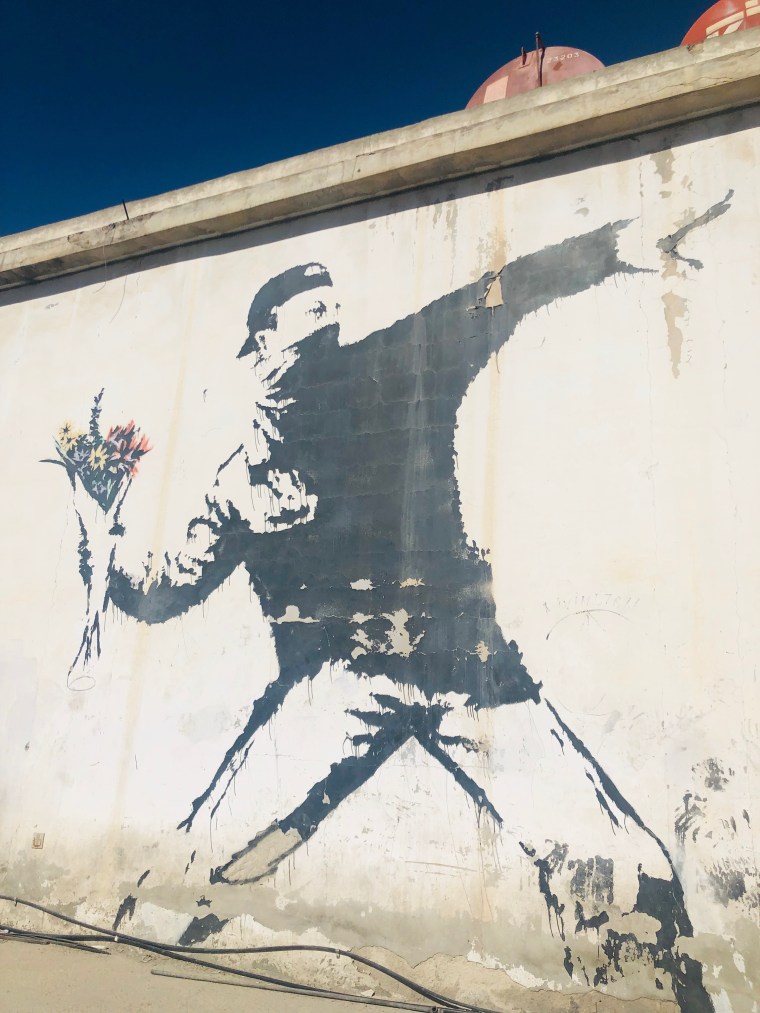
With this background in mind, I began my preliminary research by taking a graffiti tour with a Palestinian guide. This initial tour was crucial, as he was able to point out key pieces of art (such as those by famous English graffiti artist Banksy) and direct me to other wall-related graffiti that was in the area but not necessarily on the wall itself. I came back at a later date to actually scrutinize individual pieces and photograph the wall itself; this first day was just to get my bearings with the help of a local. With this as my main goal for the day, I was able to relax a little and just enjoy learning.

IMG_5134.jpeg

Due to the constantly changing nature of graffiti, some of the pieces that I had seen online when I had been doing research for my grant proposal had been completely removed or covered by new pieces of graffiti. For example, one, which had previously depicted President Trump and Prime Minister Netanyahu in a kiss, had been altered to remove their embrace. It may be interesting to go again in a year or so to see how the visible graffiti has changed — which pieces have been scrubbed away, or covered up by other graffiti, or had their message altered.

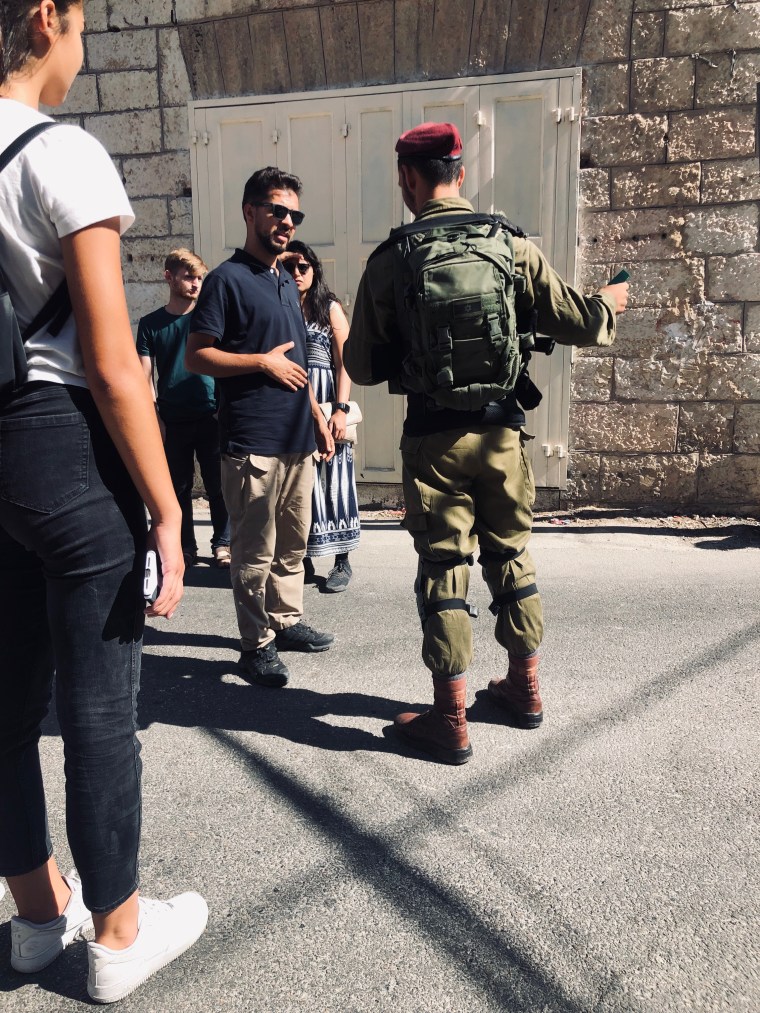
My guide also took me into Bethlehem to see a Palestinian refugee camp, where I got to talk to some locals (including an elderly man who rememberd when the Palestinians were orignally evicted from their homes in 1948 during what is known to Israelis as their War of Independence and known to Palestinians as The Nakba, meaning “the Catastrophe” in Arabic). Seeing the lives of Palestinians as they went about their days was honestly just as impactful as the graffiti. At one point, we had to cross into a piece of territory that was technically under the control of Israel. We, as foreigners, were allowed in but our Palestinian guide was stopped by IDF soldiers before he even got to the checkpoint.

IMG_5230.jpeg

But it wasn’t all politics and gloom — we visited a part of Hebron, where we saw a glassblowing workshop. We also saw the Church of the Nativity in Bethlehem, the (honestly, kind of tacky) Crusade-era church built to commemorate the supposed birthplace of Jesus. And we got lunch at a really lovely Palestinian cafe, which was still open despite the fact that it was a Muslim holiday and most places were closed.

IMG_5210.jpeg

When I originally wrote this grant proposal, I had hoped to learn about both sides of the Israel-Palestine conflict through the artwork on the wall. As it turned out, there wasn’t much artwork on the Israeli side at all, nor was there much artwork on the Palestinian side that might be described as “pro-Israel.” I thought that this might be the case going in — graffiti often being used more as a vessel for protest rather than praise — so my trip helped to confirm my belief.

Because I actually visited Palestine/the West Bank, rather than just viewing images of the wall online, I actually got a sense of what life is like for the Palestinians who live behind the wall. Perhaps most apparent was the great wealth disparity that was immediately visible as soon as I crossed from Jerusalem to Bethlehem. They feel like worlds apart — one is relatively safe, modern, and comfortable, and the other looks more like what you’d imagine a war zone in the Middle East to be. The massive concrete wall, guard towers, and IDF soldiers watching you from above doesn’t help.  

IMG_5132.jpeg  

Do I recommend that you go to the wall itself? Personally, I feel a little conflicted about the concept of political tourism, because actual people’s lives aren’t something to be gawked at and photographed like animals at a zoo — however, it’s critical to educate yourself about the history and political context of the places you go, and one of the best ways to do that is simply to pay a visit to a contested area. Each city has one– it’s Freedom Square in Budapest, it’s the Opéra in Vichy.

As the quote goes, travel is fatal to prejudice, bigotry, and narrow-mindedness. Respect the people you encounter, don’t treat it like it’s another tourist destination for Instagram, and share what you see if it so moves you to consider a different perspective or narrative than you thought you knew.

If you ever get the chance to visit Israel-Palestine, I highly recommend popping over to the West Bank to get the Palestinian story. Whatever you decide, do as the writing on the wall says, and “don’t be a brick in this wall.”IMG_5145


That’s about it for today. Thanks for reading, and I’ll see you in the next one with more updates on my trip to Israel-Palestine this summer. Don’t forget to check me out on Pinterest, Instagram, Facebook, BloglovinTwitter, and Tumblr! For business inquiries, shoot me an email at lensembledujour@gmail.com!


Top: Zara

Coat: Forever21

Trousers: Altar’d State